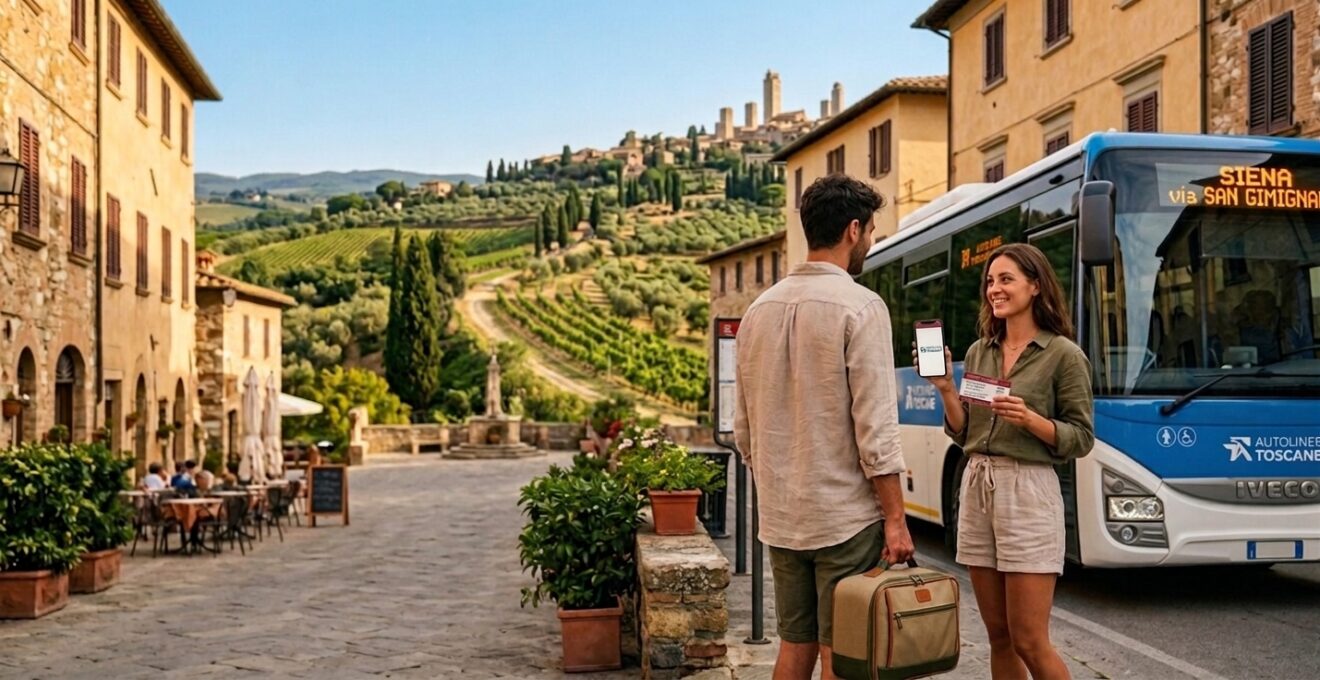
Planning a romantic Tuscan getaway without the stress of navigating unfamiliar roads, deciphering ZTL restricted zones, or facing surprise parking fines? Public transport in Tuscany offers exactly what many travelers seek: freedom to explore iconic cities and authentic hilltop villages without the anxiety of driving abroad. Far from limiting your options, Tuscany’s network of regional trains and buses opens access to Florence, Pisa, Siena, and even perched medieval towns like San Gimignano—all while saving substantially compared to car rental costs.
The system combines three complementary pillars: Trenitalia’s regional train network connecting major cities, regional bus services reaching smaller villages, and integrated tourist passes that bundle transport with helpful navigation tools. Understanding how these pieces fit together transforms what might seem overwhelming into a straightforward, confidence-building travel strategy. Whether navigating ticket purchases through mobile apps or planning the perfect day trip itinerary, mastering Tuscany’s public transport means spending less time worrying about logistics and more time savoring the experience.
- How does public transport work in Tuscany?
- Tourist passes vs individual tickets: which saves time and money?
- Essential mobile apps for navigating Tuscany
- Booking strategies: when and where to buy tickets
- Can you reach smaller towns like San Gimignano by public transport?
- Public transport or rental car: making the right choice
- Ready to explore Tuscany by public transport
How does public transport work in Tuscany?
Tuscany’s public transport rests on a straightforward three-part foundation that covers everything from express trains between major cities to local buses climbing narrow roads to medieval villages. Trenitalia operates the regional and intercity train network linking Florence, Pisa, Siena, and other key destinations along well-maintained rail corridors. Complementing these rail connections, regional bus operators like Autolinee Toscane and Tiemme Spa extend coverage to hilltop towns and countryside areas where trains don’t reach. Finally, multi-day tourist passes integrate transport access with digital tools, simplifying navigation for travelers unfamiliar with the region.
Your Tuscany transport essentials in 30 seconds:
- Trenitalia regional trains connect Florence, Pisa, and Siena with frequent daily departures
- Regional buses reach villages like San Gimignano through coordinated connections
- English-language support available in major station apps, ticket machines, and signage
- ZTL restricted zones in historic centers make public transport more convenient than driving
- Multi-day passes bundle unlimited travel with navigation apps and audio guides
One immediate concern for English-speaking travelers dissolves quickly: the system functions smoothly in English. Major train stations like Florence’s Santa Maria Novella provide multilingual signage, ticket machines offer English interfaces, and mobile apps from Trenitalia to Google Maps display routes and schedules without requiring Italian fluency. Station staff at primary tourist hubs typically speak enough English to assist with ticket purchases and platform directions.
The ZTL zones—Zona a Traffico Limitato, or limited traffic zones—present another compelling argument for choosing public transport over rental cars. According to Florence’s official mobility portal, the historic center restricts vehicle access through electronic gates that automatically photograph license plates, with enforcement active weekdays from 7:30 AM to 8:00 PM and Saturdays until 4:00 PM. Similar restrictions apply in Pisa and Siena’s historic quarters. Rental cars entering these zones without authorization trigger fines that often reach €100-150, sometimes arriving months after travelers return home. Trains and buses, by contrast, deliver passengers directly into pedestrian-friendly historic centers without any ZTL complications.
Consider a typical journey: Florence to Siena via Trenitalia’s Regionale service typically takes about 90 minutes with departures operating throughout the day, allowing flexible scheduling without advance reservations. The route passes through Tuscany’s signature rolling landscapes, eliminating both driving stress and parking challenges once you arrive in Siena’s medieval core. This accessibility extends well beyond the major city triangle—even reaching celebrated hilltop villages through strategic bus connections, as the following sections detail.
Tourist passes vs individual tickets: which saves time and money?
The question isn’t whether tourist passes or individual tickets cost less in absolute terms—it depends entirely on your itinerary intensity, trip duration, and how much value you place on integrated planning tools versus purchasing flexibility. For travelers visiting three or more destinations within a week, multi-day passes typically deliver measurable savings while eliminating the mental overhead of calculating and purchasing separate tickets for each journey. Conversely, visitors planning a stationary Florence base with just one or two day trips may find individual Trenitalia and bus tickets more economical.
Multi-day tourist passes like the Tuscany bus pass bundle unlimited regional transport with additional services: mobile apps providing real-time navigation, multilingual audio guides during journeys, and sometimes partner discounts at museums or attractions. These extras transform a simple transport ticket into a comprehensive travel companion, particularly valuable for first-time visitors navigating unfamiliar territory. The apps typically include pre-configured itineraries, live departure updates, and offline maps—features that reduce pre-trip planning stress and on-the-ground confusion.
Regional passes from Trenitalia exist but come with practical limitations for international tourists. These passes typically restrict usage to specific geographic zones, offer minimal additional services beyond basic transport, and can prove complicated to purchase for non-Italian residents. The paperwork and validation requirements often outweigh any marginal cost savings compared to either tourist-focused passes or simple pay-as-you-go ticketing.
| Criteria | Multi-Day Tourist Pass | Individual Tickets |
|---|---|---|
| Best for | 3+ destinations in 5-7 days, multiple daily trips | 1-2 city visits, stationary base with occasional excursions |
| Flexibility | Unlimited travel within validity period, hop-on convenience | Complete route control, pay only for trips taken |
| Additional services | Navigation apps, audio guides, museum partnerships | None—transport only |
| Planning effort | Minimal—single purchase covers most needs | Moderate—research and purchase each segment |
| Typical scenario cost | Check current rates for 3-day coverage including buses | Florence-Pisa round-trip (~€16) + Florence-Siena round-trip (~€20) + Poggibonsi-San Gimignano bus (~€6) = ~€42 base |
Picture this scenario: a couple spending five days visiting Florence for two days, Pisa for one day, Siena for one day, and San Gimignano for one day. Purchasing individual Trenitalia tickets for Florence-Pisa, Florence-Siena, and the connecting buses to San Gimignano, plus return journeys, accumulates costs and requires multiple ticket transactions—each a potential point of confusion or delay. A multi-day pass covering the same routes eliminates transaction friction, includes helpful navigation features, and often costs 30-40% less than the sum of individual segments when you factor in the value of included services.
The decision framework breaks down clearly: Choose a multi-day pass if you’re visiting three or more towns within a week, value simplified logistics, or want integrated audio-guide content during travel. Choose individual tickets if you’re staying primarily in one city with minimal excursions, have an unpredictable schedule, or strongly prefer paying only for confirmed trips rather than committing to a pass period.
Essential mobile apps for navigating Tuscany
Successfully navigating Tuscany’s transport network without speaking Italian relies heavily on having the right digital tools installed and configured before departure. These apps serve different but complementary functions: official operator apps handle bookings and live updates, while aggregator platforms cross-reference schedules and provide backup routing options when delays or changes occur.
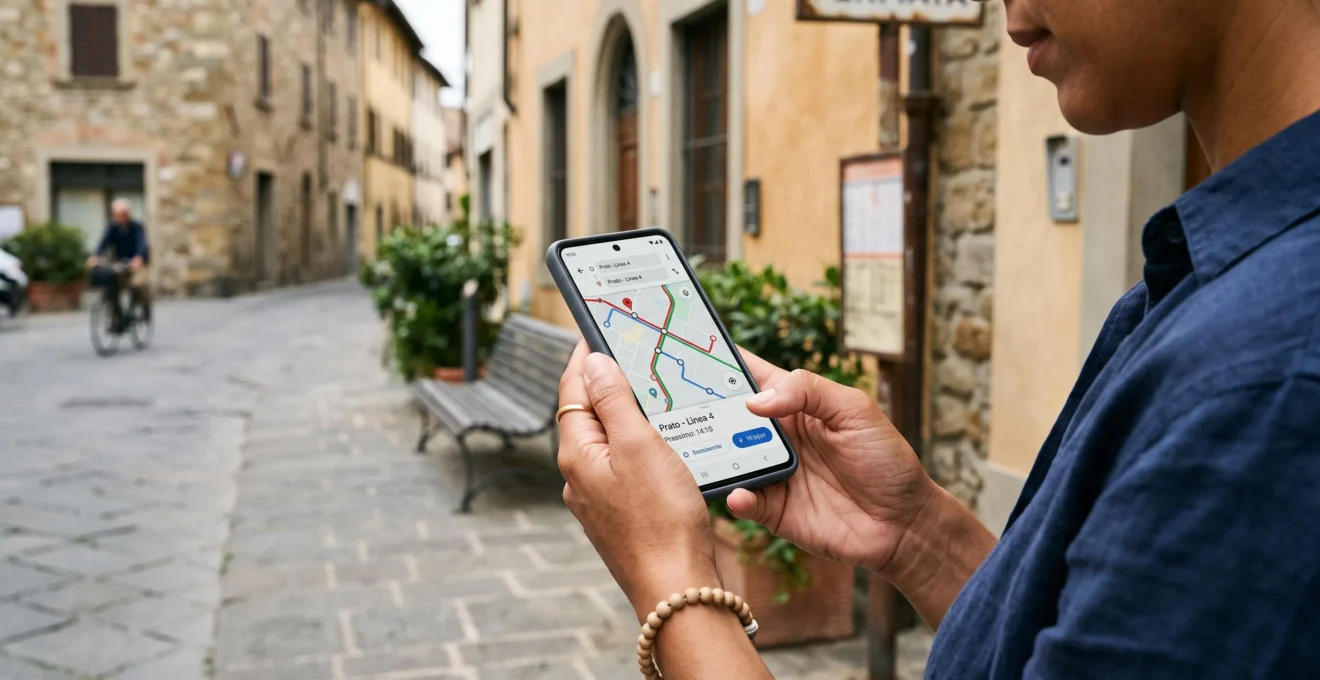
- Download the Trenitalia app for train ticket purchases, real-time schedules, and platform notifications
- Install Google Maps and download offline maps for Florence, Siena, and Pisa metropolitan areas
- Set up the Tootbus app if purchasing a multi-day pass for route suggestions and audio guides
- Create accounts and save payment methods 48 hours before departure to avoid airport Wi-Fi struggles
- Test each app’s English interface to confirm settings and familiarize yourself with navigation
The Trenitalia official app serves as your primary tool for Italian rail travel. It displays schedules in real-time, allows direct ticket purchases using international credit cards, automatically validates digital tickets (eliminating the yellow validation box requirement), and sends push notifications about platform changes or delays. The interface operates fully in English, and purchasing tickets through the app typically proves faster and more reliable than queuing at station ticket windows, especially during summer high season when lines can stretch 20-30 minutes.
Google Maps functions as the versatile backup and cross-reference tool. Its multimodal routing combines train, bus, and walking segments into complete door-to-door itineraries, aggregating schedule data from Trenitalia and regional bus operators. While not always perfectly accurate for smaller bus routes, Google Maps excels at suggesting alternatives when your primary route faces delays. The offline map functionality proves essential when traveling through rural areas between towns where cellular coverage becomes spotty—download coverage for the entire Tuscany region before leaving your hotel.
If you’ve purchased a tourist pass, the Tootbus app consolidates your travel management into one platform: reservation tracking, pre-configured scenic itineraries, multilingual audio commentary explaining landmarks visible from the bus or train, and real-time vehicle tracking. This integration means less app-switching and mental overhead when moving between destinations—particularly helpful during the inevitable moments of travel fatigue.
Moovit represents another aggregator option worth considering, though verify its current coverage for Tuscany’s regional bus operators before relying on it exclusively. User communities in travel apps sometimes report real-time incidents like unexpected route changes or overcrowded buses, providing crowd-sourced intelligence official sources might not communicate promptly. Check recent App Store or Google Play reviews filtering for “Tuscany” to confirm the app actively maintains accurate data for the region.
The critical preparation step: download and configure everything 48 hours before your flight. Create accounts, register payment cards, download offline map regions, and test basic functions while you still have reliable Wi-Fi and time to troubleshoot. Attempting first-time app setup while standing in Florence’s Santa Maria Novella station surrounded by crowds and unfamiliar signage transforms a simple task into unnecessary stress.
Booking strategies: when and where to buy tickets
Trenitalia’s regional and intercity trains follow completely different pricing and reservation models, making timing strategy essential for optimizing both cost and convenience. Regionale trains operate with fixed pricing—the ticket costs the same whether purchased two weeks ahead or two minutes before departure. This means no advantage to advance booking except avoiding ticket office queues. Intercity and Frecce (high-speed) trains use dynamic pricing similar to airlines, where fares increase as departure approaches and popular time slots fill up.
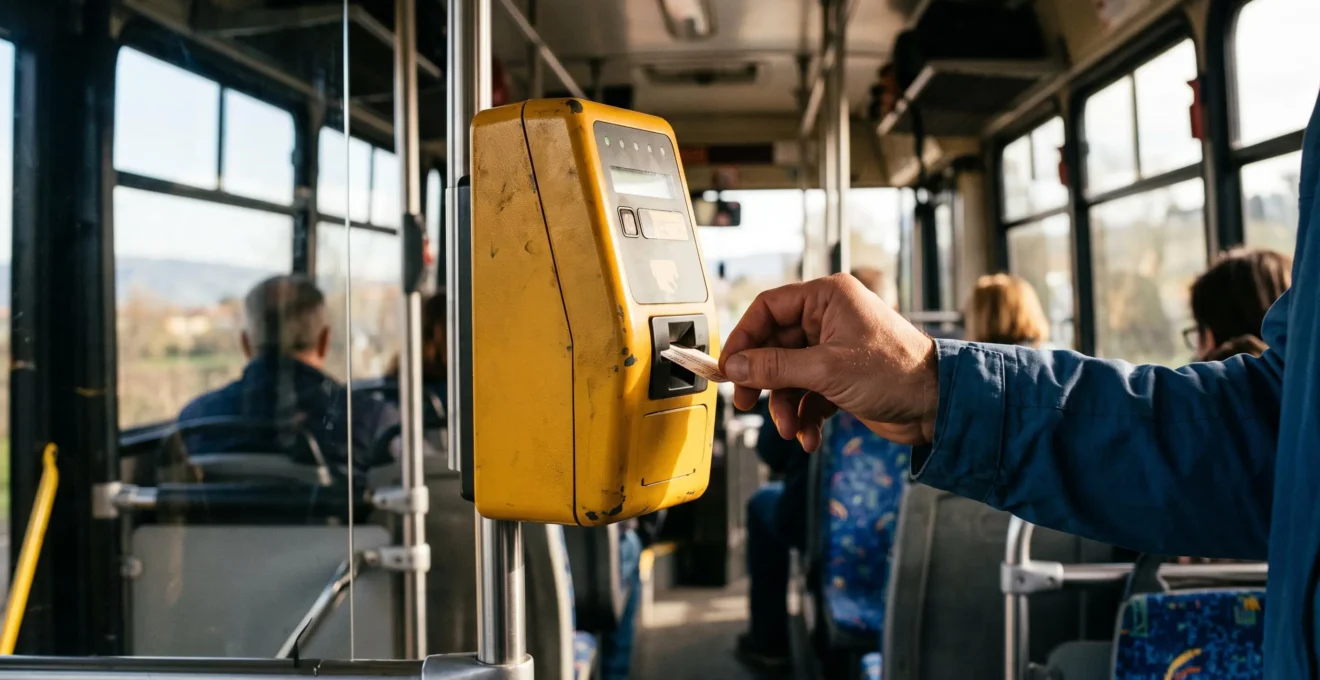
For Regionale service connecting Florence, Pisa, and Siena, purchase tickets anytime before boarding—ideally through the Trenitalia app while walking to the station. Digital tickets bought via the app validate automatically when purchased, eliminating a crucial error point. Paper tickets purchased from machines or ticket windows require manual validation at yellow electronic boxes located on station platforms before boarding. Skipping this validation step, even accidentally, can result in fines when conductors check tickets onboard.
Validate or pay: the €50+ mistake: Paper regional train tickets must be validated in the yellow boxes on the platform before boarding, even if purchased minutes earlier. Controllers checking tickets onboard frequently fine unvalidated tickets, with penalties typically starting around €50 in addition to the ticket price. Trenitalia app tickets validate automatically at purchase, making digital booking the safer choice for travelers unfamiliar with the validation requirement.
Intercity trains connecting Tuscany to Rome, Milan, or Venice justify booking 7-15 days ahead when your itinerary is confirmed. These services assign numbered seats and use yield-management pricing—early bookers secure better rates, sometimes 40-50% below last-minute walk-up fares. The tradeoff: Intercity tickets typically restrict changes and refunds, while Regionale tickets offer more flexibility despite being non-refundable.
Regional buses operated by Tiemme and Autolinee Toscane follow different purchasing protocols. Many rural routes still accept cash payment directly to the driver, though having small bills (€5-10 notes rather than €50s) prevents awkward situations when drivers lack change. Larger towns offer ticket sales at tobacconists (tabacchi) marked with distinctive “T” signs, and some routes support app-based ticket purchases through operator-specific apps. Regardless of purchase method, validate your bus ticket using the small stamping machines onboard—yes, even tickets bought from the driver.
Common mistakes compound unnecessary stress and expense: forgetting to validate paper Regionale tickets tops the list, followed by attempting to modify or refund standard regional tickets (impossible unlike Intercity), and booking multi-segment journeys without verifying connection times leave adequate transfer windows. Trenitalia’s regional trains sometimes run 5-10 minutes late, so booking a connection with only a 15-minute transfer window in a large station like Florence risks missing your onward journey.
Physical backup options exist when apps fail or phones die. Ticket machines at major stations offer English interfaces and accept international credit cards, though queues can form during peak morning hours. Staffed Trenitalia ticket windows provide personalized assistance but expect 20-30 minute waits during high season mornings when tour groups arrive. Tabacchi shops throughout city centers sell regional bus tickets and sometimes basic train tickets, identifiable by the large “T” sign—useful when you need a ticket immediately and the station is blocks away.
Can you reach smaller towns like San Gimignano by public transport?
The perception that Tuscany’s celebrated hilltop villages require rental cars persists despite straightforward public transport access to most tourist-priority destinations. San Gimignano—the medieval “town of towers” frequently topping Tuscany bucket lists—connects to Florence through a two-segment journey that proves more relaxing than navigating unfamiliar rural roads, mysterious ZTL boundaries, and limited parking at your destination.
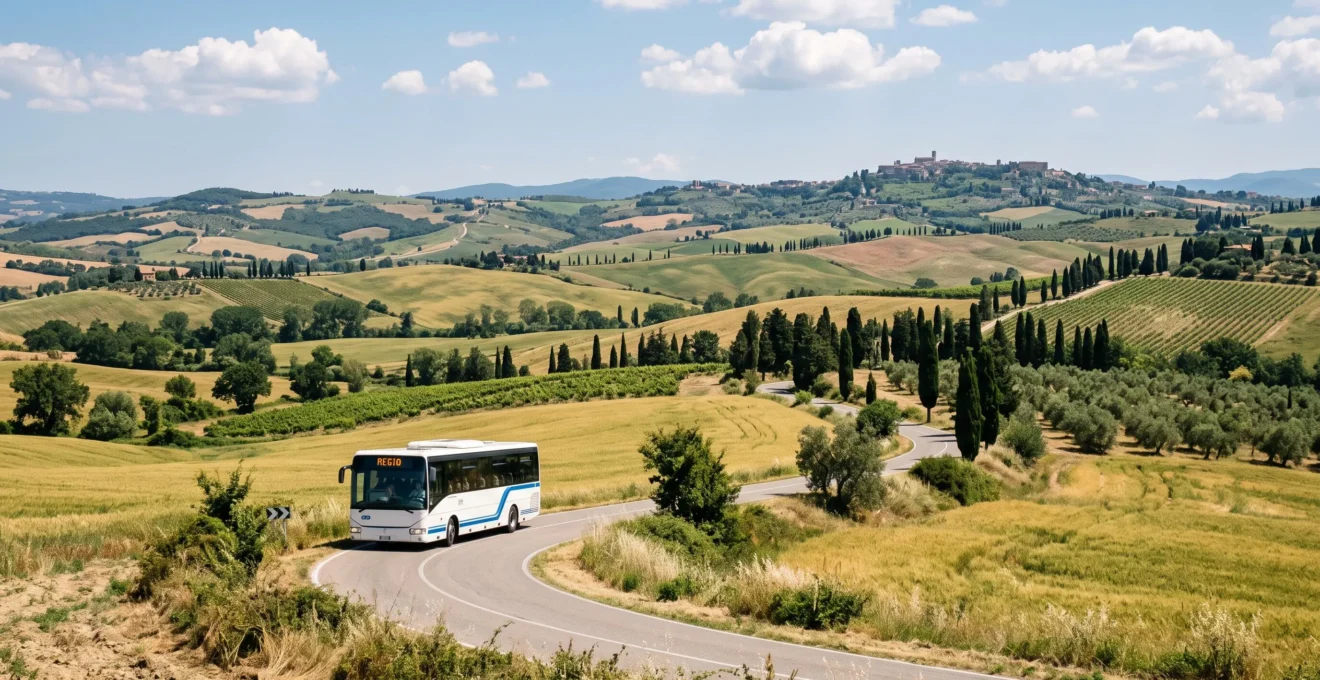
San Gimignano by bus: your quick guide
- Route: Florence Santa Maria Novella → Poggibonsi (Regionale train, ~45-50 min) → San Gimignano (Tiemme bus line 130, ~25 min)
- Total journey time: Approximately 90 minutes with connection buffer
- Service status: Autolinee Toscane confirms line 130 operates regularly
- Key tip: Verify return bus schedules before ascending to San Gimignano—frequency reduces significantly on Sundays and after 5 PM
- Recommended visit duration: Minimum 3-4 hours to justify travel time and experience the town properly
The journey begins with a Trenitalia Regionale train from Florence to Poggibonsi-San Gimignano station (confusingly, Poggibonsi serves as the rail hub despite San Gimignano’s greater fame). Trains depart throughout the day without requiring advance reservations. Upon arriving at Poggibonsi, the Tiemme line 130 bus completes the connection to San Gimignano’s hilltop center, with the bus stop located directly outside the train station.
According to travelers on Rick Steves’ forum, tickets for the bus can be purchased on-site without advance reservations, though arriving with some schedule buffer helps ensure you don’t face an unexpected hour-long wait if you just miss a departure. Weekend and Sunday service operates on reduced frequency compared to weekdays—the single most important factor to verify before committing to this excursion.
Other accessible hilltop towns include Volterra (reachable via bus from Pontedera or Colle Val d’Elsa with Tiemme services) and Monteriggioni (direct bus connections from Siena). Honest acknowledgment: some smaller Chianti villages and remote Val d’Orcia hamlets remain genuinely difficult to access without private transport. Bus service may exist but operate only once or twice daily, making day trips impractical. Public transport opens perhaps 80% of Tuscany’s must-see destinations—impressive coverage, but not universal.
Comparing San Gimignano access objectively: driving takes roughly 75 minutes from Florence versus 90 minutes via train and bus. The car saves 15 minutes but introduces navigation stress through unfamiliar countryside, potential ZTL violations in Poggibonsi’s center if GPS routes incorrectly, and mandatory use of paid parking lots (typically €10-15 for the day) in modern areas below San Gimignano’s walls followed by uphill walking. The bus deposits passengers directly at the historic gate, requires zero navigation decisions, costs approximately €6-8 total for the Poggibonsi-San Gimignano segment, and allows passengers to relax, admire scenery, or review their destination research rather than focusing on driving.
A strategic itinerary optimization: combine San Gimignano with Siena in a single ambitious day trip from Florence. Take an early train to Siena, explore the morning, then catch a direct bus from Siena to Poggibonsi and transfer to line 130 for San Gimignano in the afternoon. This routing maximizes the value of your travel time by visiting two destinations rather than making separate round-trips, though it requires comfortable walking endurance and accepting a packed schedule.
The essential practical advice: always verify return bus schedules before ascending into any hilltop village. Getting stranded in San Gimignano because the last bus departed at 5:30 PM transforms a memorable day into a logistical nightmare requiring expensive taxi services back to the nearest train station. Download PDF schedules as offline backups when visiting smaller towns where cellular coverage might prove unreliable.
Public transport or rental car: making the right choice
The choice between public transport and rental cars isn’t binary good versus bad—it’s about matching transportation mode to your specific trip profile, comfort level, and priorities. Both options deliver successful Tuscan experiences when aligned with traveler needs, and both involve tradeoffs worth understanding clearly before committing.
Start with the most predictive decision criterion: your psychological comfort with driving in Italy. If navigating ZTL zones, reading Italian road signs quickly, handling aggressive roundabout merging, and parallel parking on narrow medieval streets sounds stressful rather than adventurous, public transport eliminates this entire category of anxiety. Conversely, experienced international drivers who enjoy the autonomy of having their own vehicle may find the freedom worth the additional complexity. There’s no objective right answer—only honest self-assessment of which stressors you’d rather manage.
The second major criterion: how many destinations you’re visiting and how intensively. Visiting three or more towns within five to seven days strongly favors public transport combined with multi-day passes—costs decrease per trip, you avoid daily car rental charges during stationary days, and trains eliminate the fatigue of constant driving. If your itinerary involves just one or two cities with a stationary Florence base and occasional day trips, rental cars become more economically competitive, though convenience factors still tilt toward trains for major city connections.
- Assess driving comfort in unfamiliar environmentsHigh anxiety about ZTL zones, Italian driving culture, or navigation → Public transport strongly recommended. Confident international driving experience and enjoy road trips → Car rental viable.
- Count your destinations and trip intensityThree or more towns in 5-7 days → Public transport + passes optimize cost and convenience. One to two locations or 10+ day stays → Car rental becomes competitive.
- Calculate total real costs including hidden expensesCar: Base rental + fuel + daily parking + ZTL risk. Public transport: Passes or individual tickets only, no hidden costs.
- Evaluate your flexibility requirementsNeed to change plans daily or visit remote Chianti estates → Car provides maximum flexibility. Following a structured itinerary visiting major towns → Public transport handles 80% of desired destinations.
Real cost comparison for a typical five-day scenario visiting Florence, Pisa, Siena, and San Gimignano: Car rental for a compact vehicle runs approximately $180-220 for the week during high season, plus roughly $60-80 in fuel for 200-250 miles of driving, plus $10-15 daily parking in Florence and Siena (hotels rarely include free parking in historic centers) totaling another $50-75, plus the unquantifiable but real risk of a €100-150 ZTL fine if GPS routes through a restricted zone. Total car costs: $290-450 for two people. Public transport with a combination of multi-day passes and supplemental tickets typically runs $120-180 total for the same itinerary, representing a 40-60% savings while simultaneously eliminating driving stress.
Acknowledging rental car advantages honestly: total schedule flexibility to depart at 6 AM or return at midnight without checking timetables; luggage convenience when moving between hotels with heavy bags; access to truly remote locations like isolated agriturismos in Val d’Orcia or small Chianti wine estates without scheduled bus service; and personal space for couples or families who value private conversation and climate control. These aren’t trivial benefits—they legitimately enhance certain trip styles.
Car disadvantages beyond cost: ZTL stress and potential fines that can double your transport budget retroactively; parking scarcity in historic centers forcing use of distant lots followed by walking or shuttle buses anyway; driving fatigue in dense Florence traffic or winding mountain roads; navigation cognitive load consuming mental energy better spent enjoying your surroundings; reduced spontaneous wine tasting since someone must remain sober to drive safely.
Public transport proves optimal for: couples or solo travelers on 3-7 day trips, itineraries focused on major towns plus one or two accessible villages, travelers experiencing stress about foreign driving, moderate budgets seeking to minimize costs, and those valuing cultural immersion through local transport rather than isolation in a private vehicle. Cars make more sense for: families of four or more where per-person transport costs favor driving, stays of 10+ days with extensive rural exploration, confident drivers who genuinely enjoy navigating new places, and travelers requiring absolute schedule flexibility without timetable constraints.
For those wondering about the traditional car-free Tuscany concern—accessing authentic experiences rather than just tourist circuits—public transport now reaches the destinations that matter most to first-time visitors. San Gimignano, Volterra, Monteriggioni, and the major art cities all connect reliably. The romantic image of spontaneously discovering an unmarked trattoria down a dirt road exists, but represents perhaps 5% of most travelers’ actual time. The remaining 95% focuses on planned destinations where public transport delivers efficiently while preserving energy and budgets for the experiences that justify visiting Tuscany in the first place. For further perspective on navigating European transport decisions, see this guide to renting a car when visiting Europe.
Ready to explore Tuscany by public transport
Tuscany’s public transport network isn’t a compromise—it’s a strategic asset that experienced travelers leverage for lower costs, reduced stress, and deeper cultural engagement. The combination of frequent Trenitalia regional trains, coordinated bus connections to hilltop villages, and integrated tourist passes creates genuine accessibility to the region’s signature destinations without requiring navigation of ZTL zones, expensive parking lots, or unfamiliar driving conditions.
The transformation from logistical anxiety to operational confidence requires just three concrete actions: download the essential apps 48 hours before departure (Trenitalia for trains, Google Maps for multimodal routing, and your tourist pass provider if applicable), understand the validation requirement for paper tickets on both trains and buses to avoid unnecessary fines, and verify return schedules before visiting smaller villages where frequency drops significantly in afternoons and weekends.
San Gimignano, Siena’s medieval core, Pisa’s iconic monuments, and Florence’s Renaissance masterpieces all connect through straightforward public routes that cost 40-60% less than car rental while delivering passengers directly into pedestrian-friendly historic centers. The villages genuinely requiring private transport represent a small minority of destinations on most travelers’ wish lists. For the 80% of must-see locations accessible by train and bus, choosing public transport means spending less time worrying about logistics and more time experiencing why Tuscany captivates millions of visitors annually.
The question isn’t whether you can explore Tuscany without a car—clearly you can, and many travelers do so successfully every season. The real question is whether the public transport approach aligns with your specific comfort level, itinerary intensity, and travel values. For couples seeking a romantic, stress-free anniversary celebration focused on major cultural sites and accessible villages, the answer increasingly points toward trains and buses as the smarter strategic choice.