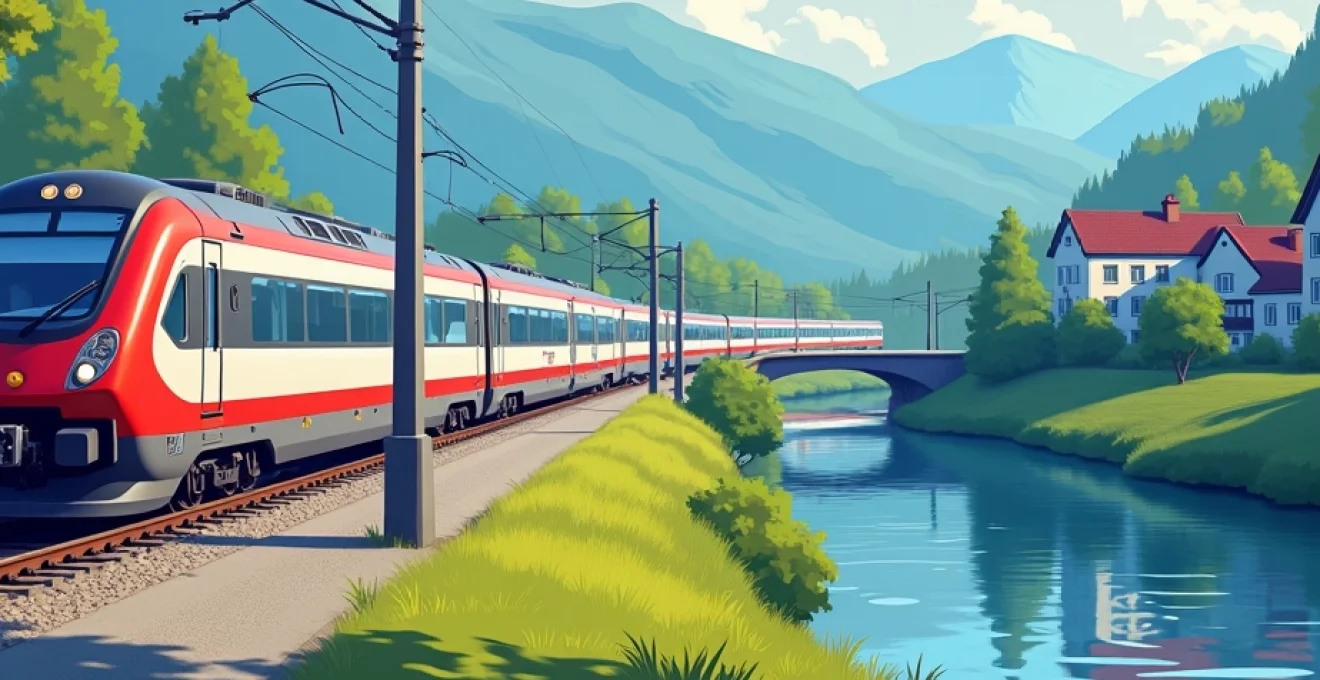
The journey between Vienna and Munich by train epitomizes the essence of modern European rail travel. This route, spanning approximately 400 kilometers, seamlessly connects two of Central Europe’s most captivating cities. As you embark on this cross-border adventure, you’ll experience a blend of cutting-edge rail technology and breathtaking landscapes, all while enjoying the comfort and convenience that train travel affords.
From the moment you step aboard in Vienna to your arrival in the heart of Munich, you’re not just traveling between destinations; you’re experiencing a journey through history, culture, and natural beauty. The train ride offers a unique perspective on the changing scenery, from the rolling hills of Austria to the Bavarian countryside, all while providing an environmentally friendly alternative to air travel.
Rail infrastructure between vienna and munich
The rail infrastructure connecting Vienna and Munich is a testament to modern engineering and international cooperation. This route utilizes a combination of high-speed lines and upgraded conventional tracks, allowing for swift and efficient travel between the two cities. The journey primarily takes place on the Western Railway (Westbahn) in Austria and the Munich–Salzburg line in Germany.
Significant investments have been made in recent years to enhance the speed and reliability of this corridor. Notable improvements include the four-tracking of sections between Vienna and Linz, allowing for increased capacity and faster travel times. On the German side, continuous upgrades ensure that the line can accommodate high-speed services efficiently.
One of the most impressive engineering feats along this route is the Wienerwald Tunnel , a 13-kilometer twin-tube tunnel west of Vienna. This infrastructure masterpiece not only reduces travel time but also minimizes the environmental impact on the scenic Wienerwald region.
ÖBB and deutsche bahn: key operators on the route
The Vienna to Munich rail service is a collaborative effort between Austria’s ÖBB (Österreichische Bundesbahnen) and Germany’s Deutsche Bahn. This partnership ensures a seamless travel experience across borders, with integrated ticketing and coordinated timetables.
ÖBB railjet: austria’s High-Speed train service
ÖBB’s flagship Railjet service is the primary high-speed option for travelers on this route. These sleek, red trains are capable of speeds up to 230 km/h, making them the fastest in ÖBB’s fleet. Railjets offer a comfortable and modern travel environment, with features designed to enhance the passenger experience.
Railjet trains represent the pinnacle of Austrian rail technology, combining speed, comfort, and sustainability in a single package.
Key features of Railjet trains include:
- Spacious seating arrangements with ample legroom
- Large panoramic windows for optimal views
- On-board entertainment systems
- Dedicated quiet zones for a peaceful journey
Deutsche bahn’s ICE fleet on Cross-Border routes
Deutsche Bahn contributes its InterCity Express (ICE) trains to the Vienna-Munich route, particularly for services continuing beyond Munich. These high-speed trains are renowned for their punctuality and efficiency, complementing the Railjet services perfectly.
ICE trains boast several advanced features:
- Top speeds of up to 300 km/h on suitable tracks
- Ergonomic seating with adjustable headrests
- Advanced air conditioning systems for optimal comfort
- Dedicated areas for travelers with reduced mobility
Collaboration and ticket integration between operators
The cooperation between ÖBB and Deutsche Bahn extends beyond just running trains. They have developed an integrated ticketing system that allows passengers to book their entire journey in a single transaction, regardless of which company’s trains they’ll be using. This collaboration also ensures that connections are well-coordinated, minimizing waiting times at interchange points.
Furthermore, both operators honor each other’s discount cards and rail passes, providing additional flexibility and value for frequent travelers. This level of integration is a model for cross-border rail cooperation in Europe.
Journey logistics and timetables
Understanding the logistics of the Vienna to Munich train journey is crucial for a smooth travel experience. From departure times to intermediate stops, every aspect of the trip is carefully planned to provide convenience and efficiency.
Wien hauptbahnhof to münchen hauptbahnhof direct services
Direct services between Vienna’s main station (Wien Hauptbahnhof) and Munich’s central station (München Hauptbahnhof) form the backbone of this route. These services operate throughout the day, providing travelers with flexibility in their scheduling.
Typically, trains depart from Wien Hauptbahnhof at regular intervals, with the first train leaving early in the morning and the last departure in the evening. This frequency allows both business travelers and tourists to find a suitable time for their journey.
Intermediate stops: linz, salzburg, and rosenheim
While many travelers opt for the direct service, the trains also make several important stops along the way. These intermediate stations not only serve local passengers but also offer opportunities for those wishing to break their journey and explore other Austrian and German cities.
Key stops include:
- Linz Hauptbahnhof: A major hub in Upper Austria, known for its vibrant cultural scene.
- Salzburg Hauptbahnhof: The gateway to Mozart’s birthplace and the Austrian Alps.
- Rosenheim: An important junction in Bavaria, offering connections to other parts of southern Germany.
Frequency and duration of train connections
The Vienna to Munich route is well-served, with multiple daily connections ensuring that travelers have ample choice. On average, there are about 8-10 direct trains per day, with additional options involving a single change, usually in Salzburg.
The journey time for direct services typically ranges from 4 hours to 4 hours 30 minutes, depending on the specific train and time of day. This makes train travel a competitive option compared to flying, especially when considering the city-center to city-center nature of rail connections.
Cross-border protocols at passau
As this is an international journey, there are certain cross-border procedures to be aware of. However, thanks to the Schengen Agreement, border formalities are minimal for most travelers. The train typically crosses the border near Passau, but passengers usually don’t need to disembark.
It’s worth noting that while passport checks are rare, it’s always advisable to carry valid identification. Occasionally, random checks may be conducted on board by border officials.
On-board amenities and travel classes
The Vienna to Munich train journey offers a range of amenities and travel class options to suit different preferences and budgets. Whether you’re looking for a luxurious travel experience or a cost-effective option, there’s something for everyone.
First class vs. second class accommodations
Both Railjet and ICE trains offer First and Second Class accommodations, each with its own set of features:
| Feature | First Class | Second Class |
|---|---|---|
| Seating | More spacious, often in a 2+1 configuration | Comfortable, typically in a 2+2 layout |
| Legroom | Extra legroom for enhanced comfort | Standard legroom, still comfortable for most |
| Service | At-seat service often available | Self-service options |
| Quiet Zones | More prevalent | Available on some trains |
Dining options: restaurant cars and At-Seat service
Culinary options on the Vienna to Munich route cater to various tastes and dietary requirements. Most trains feature a restaurant car or bistro, offering hot meals, snacks, and a selection of beverages. The menu often includes regional specialties, giving travelers a taste of Austrian and Bavarian cuisine.
In First Class, passengers typically enjoy at-seat service, with meals and drinks brought directly to their seats. This service adds an extra layer of comfort and convenience to the journey.
The dining experience on board is not just about sustenance; it’s an integral part of the travel experience, offering a taste of local flavors as you cross borders.
Wi-fi connectivity and power outlets
Staying connected during the journey is easy thanks to the on-board Wi-Fi services available on most trains. The quality and speed of the connection can vary, especially in mountainous regions, but it’s generally sufficient for basic browsing and email.
Power outlets are available at every seat in both First and Second Class, ensuring that passengers can keep their devices charged throughout the journey. This is particularly useful for those who want to work or enjoy entertainment on their personal devices.
Luggage allowances and storage facilities
One of the advantages of train travel is the generous luggage allowance. Unlike air travel, there are no strict weight limits, although passengers are expected to be able to handle their own luggage.
Storage options include:
- Overhead racks for smaller bags and coats
- Larger storage areas at the ends of each carriage for suitcases
- Under-seat space for personal items
It’s worth noting that while there’s usually ample space, during peak travel times it can be advisable to arrive a bit earlier to secure the best storage spots for your luggage.
Scenic routes and landscape features
The journey from Vienna to Munich is not just about reaching your destination; it’s an opportunity to witness some of Central Europe’s most stunning landscapes. The route takes you through diverse terrains, from the rolling hills of Austria to the dramatic Alpine scenery near the German border.
Alpine vistas along the Salzburg-Rosenheim stretch
As the train approaches Salzburg, passengers are treated to increasingly dramatic mountain views. The stretch between Salzburg and Rosenheim is particularly scenic, with the train winding its way through the foothills of the Alps. On clear days, the snow-capped peaks of the Bavarian Alps and the Salzkammergut region provide a breathtaking backdrop.
Keep an eye out for glimpses of iconic Alpine lakes such as Chiemsee , often referred to as the “Bavarian Sea” due to its size. This massive freshwater lake is a popular tourist destination and offers a serene contrast to the mountainous terrain.
Danube valley views between vienna and linz
The initial part of the journey, from Vienna to Linz, follows the Danube Valley. This section offers picturesque views of Europe’s second-longest river, with its lush banks and occasional castles perched on hilltops. The Wachau region, a UNESCO World Heritage site, is particularly notable for its terraced vineyards and charming riverside towns.
As you travel, you might catch glimpses of the famous Melk Abbey , a magnificent Baroque monastery overlooking the Danube. Its golden hues and imposing architecture make it a standout feature of the landscape.
Urban-rural contrasts: from austrian countryside to bavarian cities
The journey showcases a fascinating transition from the urban sprawl of Vienna through the Austrian countryside and into the Bavarian urban centers. You’ll witness a gradual change in architectural styles, from the grand Imperial buildings of Vienna to the more rustic Bavarian designs as you approach Munich.
The landscape also tells the story of the region’s agricultural heritage. Look out for:
- Neatly arranged vineyards in Lower Austria
- Expansive wheat fields in Upper Austria
- Traditional Bavarian farms with their distinctive architecture
Ticketing options and reservation systems
Navigating the ticketing options for the Vienna to Munich route can seem complex at first, but understanding the various choices can lead to significant savings and a more tailored travel experience.
Advance purchase vs. flexible fares
One of the key decisions travelers face is whether to opt for advance purchase tickets or flexible fares. Advance purchase tickets, often referred to as Sparschiene by ÖBB or Sparpreis by Deutsche Bahn, offer considerable savings but come with restrictions on changes and refunds.
Flexible fares, while more expensive, allow for changes to travel plans and are refundable. These are ideal for travelers whose schedules may be subject to change or those who prefer the peace of mind of a flexible ticket.
Booking in advance can lead to savings of up to 50% on some routes, making it an attractive option for budget-conscious travelers with fixed plans.
Interrail and eurail pass validity
For travelers planning to explore multiple countries, Interrail (for European residents) and Eurail (for non-European residents) passes are valid on this route. These passes offer flexibility and can be cost-effective for extensive travel plans.
Key points to remember about using rail passes on this route:
- Seat reservations are recommended, especially during peak travel seasons
- Some high-speed trains may require a supplement in addition to the pass
- Passes often offer additional benefits like discounts on city cards or museum entries
Seat reservation requirements for High-Speed services
While seat reservations are not always mandatory on this route, they are highly recommended, especially for high-speed services like Railjet and ICE trains. During peak travel times, such as holidays or summer months, trains can get fully booked, and having a reservation ensures you have a seat for your journey.
Reservations can typically be made:
- At the time of ticket purchase
- Separately through the railway company’s website or app
- At ticket offices in train stations
The cost of reservations is usually nominal, typically ranging from €3 to €5, and is well worth the peace of mind they provide, especially on longer journeys like Vienna to Munich.
When making reservations, consider factors such as travel direction (to sit on the scenic side of the train), proximity to dining cars, or quiet zones if you prefer a more peaceful journey. Some booking systems allow you to select specific seats, giving you control over your travel experience.
Remember that for certain promotional fares or during special events, seat reservations might be mandatory. Always check the conditions of your ticket to ensure you comply with all requirements for a smooth and enjoyable journey from Vienna to Munich.